
DNA as the genetic material and nucleotidesSpec A1.2.1, A1.2.2, A1.2.3, A1.2.4
In short
DNA is the genetic material of all living organisms; some viruses use RNA, but viruses are not considered living. DNA and RNA are made of nucleotides, each with a phosphate, a pentose sugar and a nitrogenous base. Sugar–phosphate bonding links nucleotides into a strong covalent backbone, and the sequence of bases along it forms the genetic code.
DNA as the genetic material
DNA is the genetic material of all living organisms, from bacteria to plants and animals. Some viruses use RNA as their genetic material, for example influenza virus and HIV, but viruses are not considered to be living.
Components of a nucleotide
Nucleic acids are polymers of nucleotides. Every nucleotide has three parts, joined by covalent bonds:
- a phosphate group (drawn as a circle)
- a pentose sugar, a five-carbon sugar: deoxyribose in DNA, ribose in RNA (drawn as a pentagon)
- a nitrogenous base (drawn as a rectangle), attached to the sugar on the opposite side from the phosphate
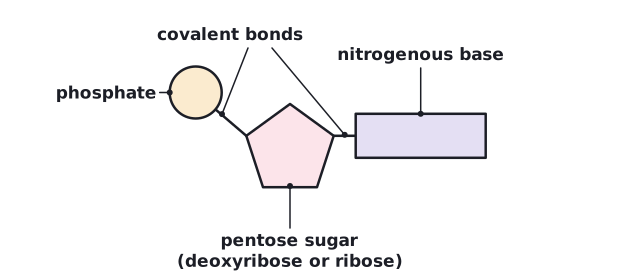 (opens full size in a new tab)
The sugar–phosphate backbone
In a strand of DNA or RNA, the phosphate of one nucleotide is covalently bonded to the sugar of the next. This sugar–phosphate bonding makes a continuous chain of covalently bonded atoms along each strand, which forms a strong backbone. The bases stick out from the backbone.
Bases form the basis of a code
| Nucleic acid | Bases |
|---|---|
| DNA | adenine (A), thymine (T), guanine (G), cytosine (C) |
| RNA | adenine (A), uracil (U), guanine (G), cytosine (C) |
The backbone is the same in every molecule. What varies is the sequence of bases, and it is this sequence that stores genetic information, in the way a sequence of letters stores the meaning of a sentence.
You need the full names of the five bases: adenine, thymine, guanine, cytosine and uracil. Spelling matters in written answers.
Written and checked against the IB Biology SL specification · Updated October 2026