
The brain, spinal cord, neurons and nervesSpec C3.1.4, C3.1.5, C3.1.6, C3.1.7, C3.1.8
In short
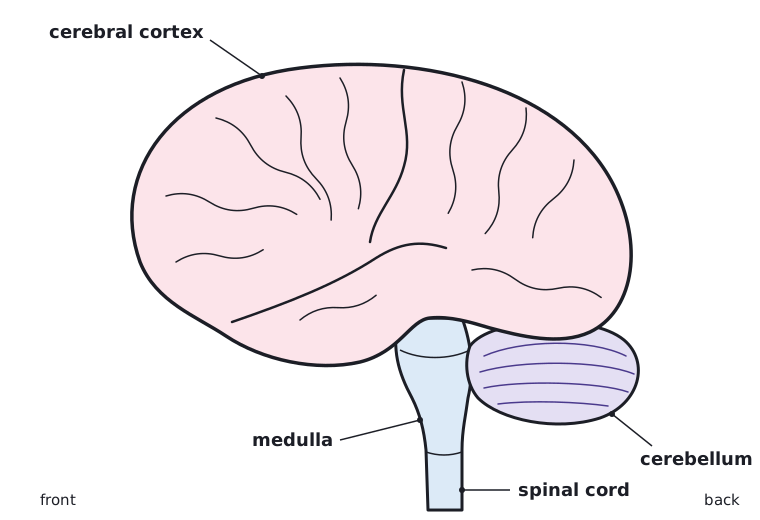
The brain is the central information integration organ: it processes information combined from several inputs and is the site of learning and memory. The spinal cord is an integrating centre for unconscious processes. Sensory neurons carry messages from receptor cells to the central nervous system, motor neurons carry impulses to muscles, and nerves are bundles of both.
The brain as the central integration organ
The brain receives impulses from many receptors at once, for example the eyes, ears and skin. It processes information combined from several inputs, compares it with stored information, and decides on a response. The brain is also the organ of learning and memory: experiences cause lasting changes in the connections between neurons, so information can be stored and recalled to modify later behaviour.
The spinal cord and unconscious processes
The spinal cord is an integrating centre for unconscious processes, such as reflexes. Conscious processes are those we are aware of and can control voluntarily, such as deciding to pick up a cup; they are coordinated by the cerebral hemispheres. Unconscious processes happen without awareness or deliberate decision, such as withdrawing a hand from a sharp object; they can be coordinated by the spinal cord without involving the brain.
In a transverse section of the spinal cord, the central grey matter contains cell bodies of neurons, interneurons and synapses; the outer white matter contains myelinated nerve fibres that carry impulses up and down the cord.
Sensory and motor neurons
- Sensory neurons convey messages from receptor cells to the central nervous system (CNS): input to the spinal cord and to the cerebral hemispheres.
- Motor neurons carry output from the cerebral hemispheres (and the spinal cord) to muscles, which are stimulated to contract.
Nerves
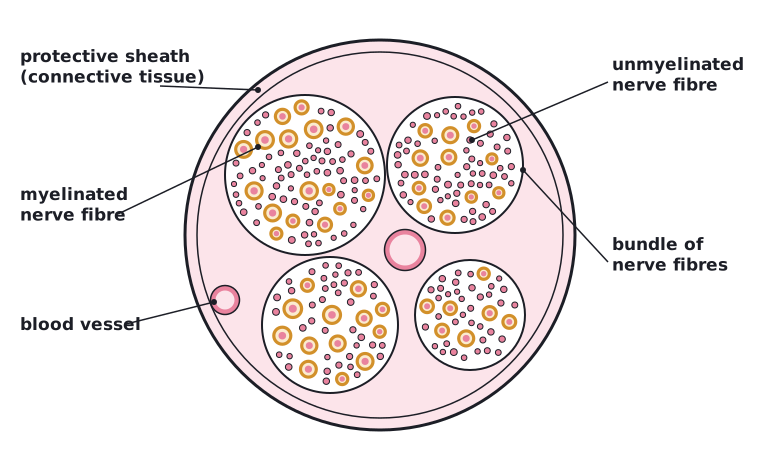
A nerve is a bundle of nerve fibres (axons) of both sensory and motor neurons, surrounded by a protective sheath of connective tissue. A transverse section of a nerve shows many fibres; some are myelinated (surrounded by a myelin sheath, which speeds conduction) and some are unmyelinated. Blood vessels supply the fibres.
 (opens full size in a new tab)
 (opens full size in a new tab)
Written and checked against the IB Biology SL specification · Updated October 2026