
External factors and gene expressionSpec D2.2.11
In short
External factors such as hormones and nutrients change the pattern of gene expression in cells. Oestrogen binds to a receptor inside target cells, and the complex acts as a transcription factor. In E. coli, allolactose (made from lactose) binds to the lac repressor so it releases the operator, allowing genes for lactose uptake and breakdown to be transcribed.
Cells change which genes they express in response to signals from outside the cell. Two examples are a hormone in animals and a nutrient in bacteria.
A hormone: oestrogen
- Oestrogen is a steroid hormone, so it diffuses through the cell membrane of target cells, for example cells of the uterus lining.
- Inside the cell (mainly in the nucleus) it binds to a specific oestrogen receptor protein.
- The hormone–receptor complex acts as a transcription factor: it binds to specific base sequences in DNA near target genes.
- Transcription of those genes increases, so the cell makes new proteins, for example those needed for the uterus lining to thicken.
A biochemical: lactose in E. coli
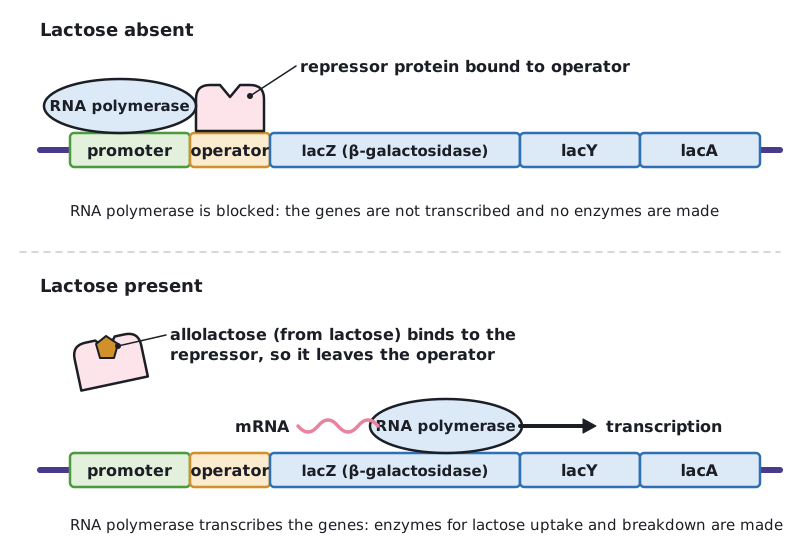
The bacterium Escherichia coli only makes the enzymes for using lactose when lactose is present. The genes for these proteins (including β-galactosidase, which hydrolyses lactose) are together in the lac operon, controlled by one promoter and an operator sequence.
| Condition | What happens | Result |
|---|---|---|
| Lactose absent | A repressor protein binds to the operator and blocks RNA polymerase | Genes not transcribed: no enzymes wasted |
| Lactose present | Allolactose (an isomer formed from lactose) binds to the repressor, changing its shape so it detaches from the operator | RNA polymerase transcribes the genes; enzymes for lactose uptake and breakdown are made |
 (opens full size in a new tab)
The guide asks for one hormone and one biochemical such as lactose or tryptophan. Learn one of each thoroughly and describe the binding to a specific DNA base sequence.
Quick check
What are the three most common stages in gene expression?
Show answer
Transcription, translation and the function of the protein product (such as an enzyme).
What is a transcription factor?
Show answer
A protein that binds to a specific base sequence in DNA, such as a promoter or enhancer, to regulate transcription.
What effect does methylation of cytosine in a promoter have?
Show answer
It represses transcription of the gene downstream.
Why do monozygotic twins become more different with age?
Show answer
They have identical genomes, but different environments change their epigenetic tags and so their gene expression.
Written and checked against the IB Biology HL specification · Updated October 2026