Adaptations of sperm and egg cellsSpec B2.3.10
In short
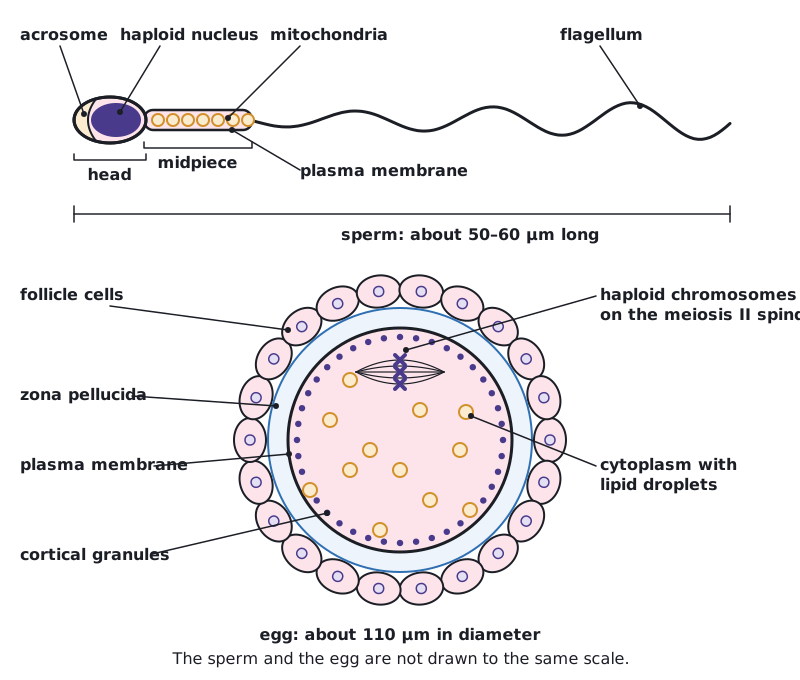
Human sperm and egg cells are haploid gametes with very different adaptations. The sperm is small and streamlined, with an acrosome of enzymes, a midpiece packed with mitochondria and a flagellum for swimming. The egg is large, with cytoplasm and nutrients for the early embryo, a protective zona pellucida and cortical granules that prevent more than one sperm fertilizing it.
| Structure | Adaptation |
|---|---|
| Haploid nucleus in the head | Carries one set of chromosomes; the DNA is tightly packed so the head is small |
| Acrosome | A large vesicle at the tip of the head containing enzymes that digest a path through the zona pellucida |
| Midpiece | Packed with mitochondria that produce ATP by aerobic respiration to power the flagellum |
| Flagellum (tail) | Beats to propel the sperm through fluid in the female reproductive tract |
| Little cytoplasm | A small, streamlined cell that swims efficiently; very large numbers are produced |
| Structure | Adaptation |
|---|---|
| Large size (about 110 µm) | Plenty of cytoplasm, with nutrients such as lipid droplets and organelles, to support the early embryo |
| Haploid set of chromosomes | One set of chromosomes, combined with the sperm's set at fertilization (the ovulated egg is a secondary oocyte that completes meiosis II only after a sperm enters) |
| Zona pellucida | A layer of glycoprotein around the egg; sperm bind to it, and it protects the egg |
| Cortical granules | Vesicles under the plasma membrane; after one sperm enters, they release their contents by exocytosis, which hardens the zona pellucida and prevents polyspermy |
| Follicle cells | A layer of cells around the egg that supports it |
 (opens full size in a new tab)
Pair each structure with its function, for example 'many mitochondria in the midpiece, to provide ATP for movement of the flagellum'. A structure alone rarely earns the mark.
Quick check
State the two properties of stem cells.
Show answer
They can divide endlessly and differentiate along different pathways.
Name two stem cell niches in adult humans.
Show answer
Bone marrow and hair follicles.
What type of stem cell is found in adult bone marrow?
Show answer
Multipotent.
What happens to the SA:V of a cube when its side length doubles?
Show answer
It halves.
HL only What do type II pneumocytes secrete?
Show answer
Surfactant, from lamellar bodies.
Written and checked against the IB Biology HL specification · Updated October 2026