
Anthropogenic causes and positive feedbackSpec D4.3.1, D4.3.2
In short
Anthropogenic climate change is caused by human increases in atmospheric concentrations of carbon dioxide and methane, which enhance the greenhouse effect. Positive feedback cycles then accelerate warming: release of carbon dioxide from the deep ocean, loss of reflective snow and ice, faster decomposition and methane release in thawing permafrost, and more droughts and forest fires.
Carbon dioxide and methane are greenhouse gases: they absorb and re-emit longer-wave infrared radiation from the Earth's surface, warming the atmosphere. Anthropogenic (human-caused) increases in their concentrations enhance the greenhouse effect.
| Gas | Main anthropogenic sources |
|---|---|
| Carbon dioxide | Combustion of coal, oil and natural gas; deforestation and burning of forests; cement production |
| Methane | Livestock such as cattle (fermentation in the gut); flooded rice fields; landfill; leaks from fossil fuel extraction |
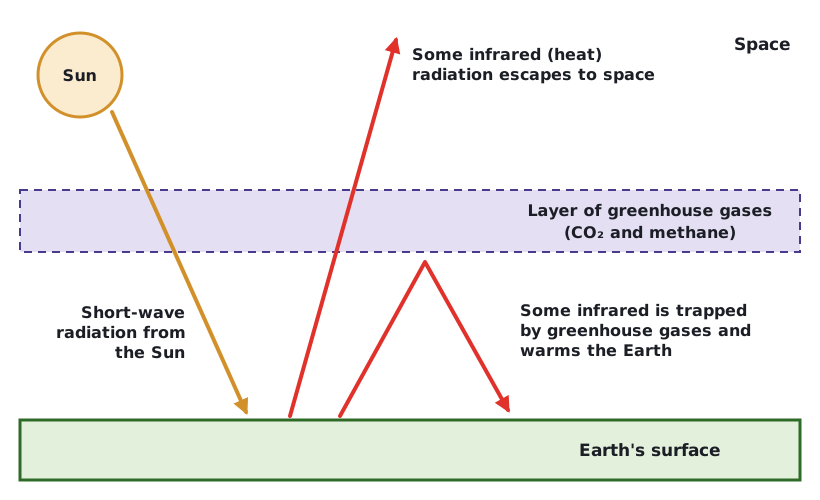 (opens full size in a new tab)
Positive feedback cycles
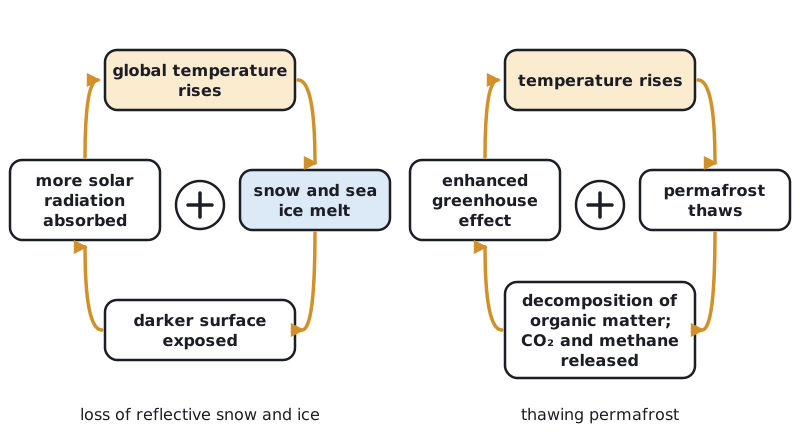
In positive feedback, warming causes changes that cause further warming.
- Release of CO₂ from the deep ocean: warmer water holds less dissolved CO₂, and changing circulation brings CO₂-rich deep water to the surface, where it is released.
- Loss of reflective snow and ice: dark land and sea absorb more solar radiation than white ice, so warming speeds up.
- Decomposition of peat and permafrost: thawing allows faster decomposition of peat and of previously undecomposed organic matter, releasing CO₂.
- Methane from melting permafrost: anaerobic decomposition in waterlogged thawed soil releases methane.
- Droughts and forest fires: fires release CO₂, and drought-stressed plants absorb less CO₂.
 (opens full size in a new tab)
Written and checked against the IB Biology HL specification · Updated October 2026