
Allopatric and sympatric speciation, and adaptive radiationSpec A4.1.8, A4.1.9
In short
Allopatric speciation happens when populations are separated geographically. Sympatric speciation happens in the same area, when reproductive isolation is behavioural or temporal. Both need reproductive isolation and divergence of gene pools. Adaptive radiation is the rapid evolution of many species from one ancestor, each using a different niche, so closely related species can coexist without competing.
Reproductive isolation can be geographic, behavioural or temporal. The type of isolation decides whether speciation is allopatric or sympatric.
- Geographic isolation: a physical barrier separates the populations.
- Behavioural isolation: differences in courtship, mating calls or displays mean individuals do not recognise each other as mates.
- Temporal isolation: populations breed or flower at different times of day or year, so they do not mate.
Allopatric speciation happens in different places: populations are separated by geographic isolation. Sympatric speciation happens in the same place: reproductive isolation arises without a geographical barrier, by behavioural or temporal isolation (or, in plants, by polyploidy).
An example in progress is the apple maggot fly (Rhagoletis pomonella) in North America. Its original host is hawthorn, but some flies began to lay eggs on introduced apple trees. Flies mate on their host fruit, and apples ripen earlier than hawthorn fruits, so the two host races breed at different times. Gene flow between them is reduced.
| Allopatric | Sympatric | |
|---|---|---|
| Geographical barrier | Yes | No: populations share an area |
| Type of reproductive isolation | Geographic | Behavioural or temporal (or polyploidy in plants) |
| Gene flow stops | Yes | Yes |
| Gene pools diverge through differential selection | Yes | Yes |
| Outcome | New species that cannot interbreed | New species that cannot interbreed |
Adaptive radiation
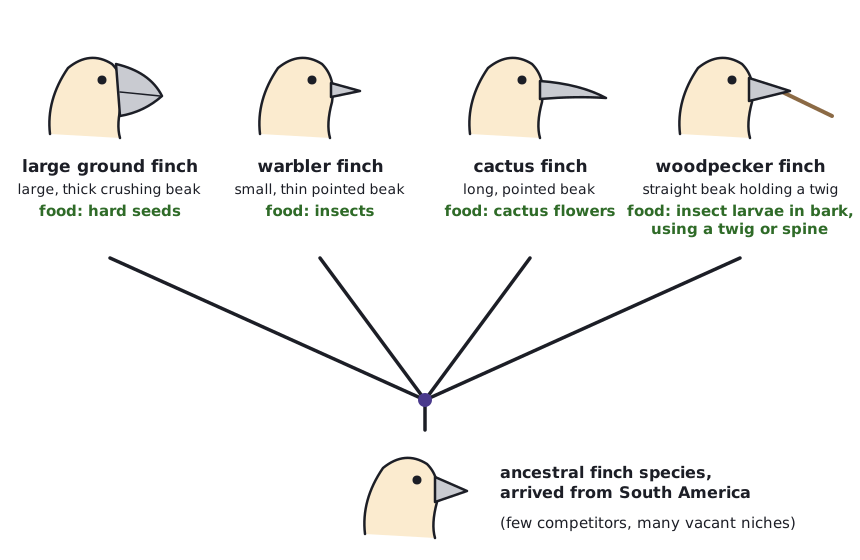
Adaptive radiation is the rapid evolution of many species from a single ancestral species, each adapted to a different niche. It happens when a lineage reaches an area with vacant niches, such as a newly formed island group.
The finches of the Galápagos Islands descend from one ancestral species that arrived from South America. They now include species with large crushing beaks for hard seeds, thin beaks for insects, long beaks for cactus flowers, and a species that uses twigs or spines to extract insect larvae. The honeycreepers of Hawaii are a similar example.
Because each species uses different resources, closely related species can coexist without competing. Adaptive radiation therefore increases biodiversity in ecosystems where there are vacant niches.
 (opens full size in a new tab)
Do not confuse adaptive radiation with convergent evolution. Adaptive radiation is one ancestor diverging into many forms; convergent evolution is unrelated lineages becoming similar.
Written and checked against the IB Biology HL specification · Updated October 2026